HLA-Z
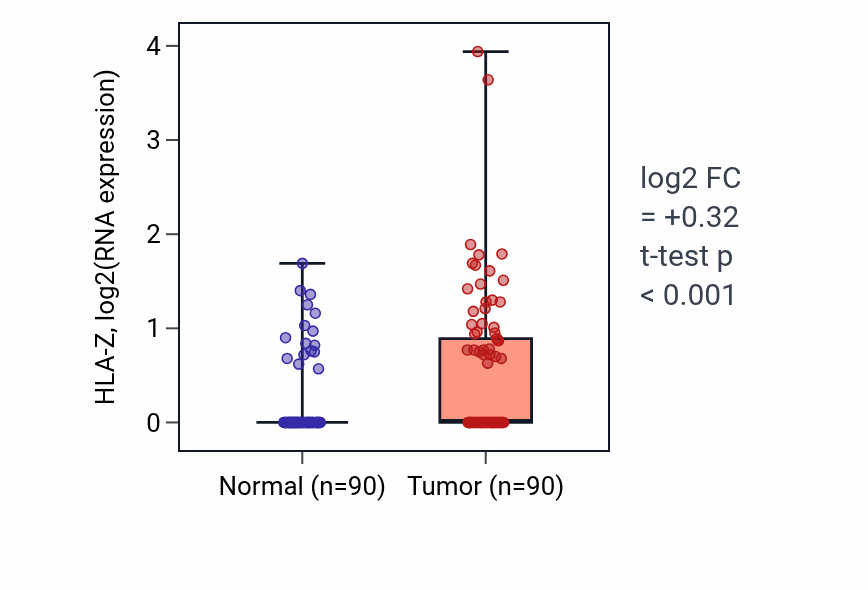
RNA — tumor vs normalAcross TCGA pan-cancer cohorts, HLA-Z RNA differs between tumor and matched normal tissue in 11 of 18 cancer types tested, making tumor–normal expression one of HLA-Z’s most consistent transcriptional readouts.
The strongest signal is observed in breast invasive carcinoma (BRCA), where HLA-Z RNA is more highly expressed in tumor relative to normal tissue. In most cancer types HLA-Z is over-expressed in tumor, although a few such as PAAD show the opposite, repressed pattern.
BRCA, STAD, and LUAD are the cancer types where HLA-Z tumor–normal differential expression is most reproducible.
RNA tumor vs normal associations by lineage
Ranked by sampling consensus. Fold-change is the tumor-versus-normal difference in HLA-Z RNA (log2); positive values indicate higher expression in tumor. p-values are from the differential-expression test.
Pink = over-expressed in tumor, green = repressed in tumor. Showing the 11 strongest of 11 lineages.
Exploration
- Same gene, other analysis: HLA-Z RNA expression & survival · all HLA-Z data types