USP35
RNA — tumor vs normalAcross TCGA pan-cancer cohorts, USP35 RNA differs between tumor and matched normal tissue in 13 of 18 cancer types tested, making tumor–normal expression one of USP35’s most consistent transcriptional readouts.
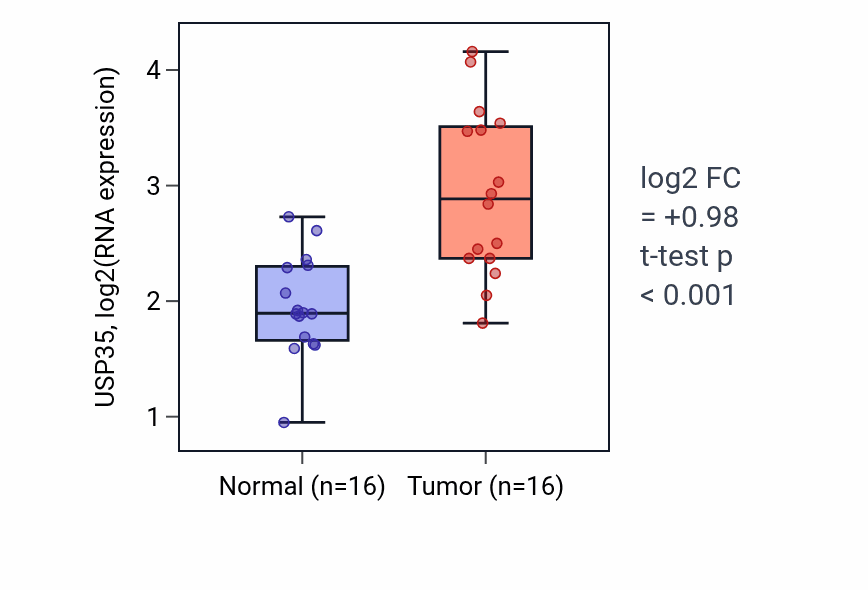
The strongest signal is observed in head and neck squamous cell carcinoma (HNSC), where USP35 RNA is more highly expressed in tumor relative to normal tissue. In most cancer types USP35 is over-expressed in tumor.
HNSC, COAD, and LIHC are the cancer types where USP35 tumor–normal differential expression is most reproducible.
RNA tumor vs normal associations by lineage
Ranked by sampling consensus. Fold-change is the tumor-versus-normal difference in USP35 RNA (log2); positive values indicate higher expression in tumor. p-values are from the differential-expression test.
Pink = over-expressed in tumor, green = repressed in tumor. Showing the 12 strongest of 13 lineages.
Exploration
- Same gene, other analysis: USP35 RNA expression & survival · all USP35 data types