GRIA4
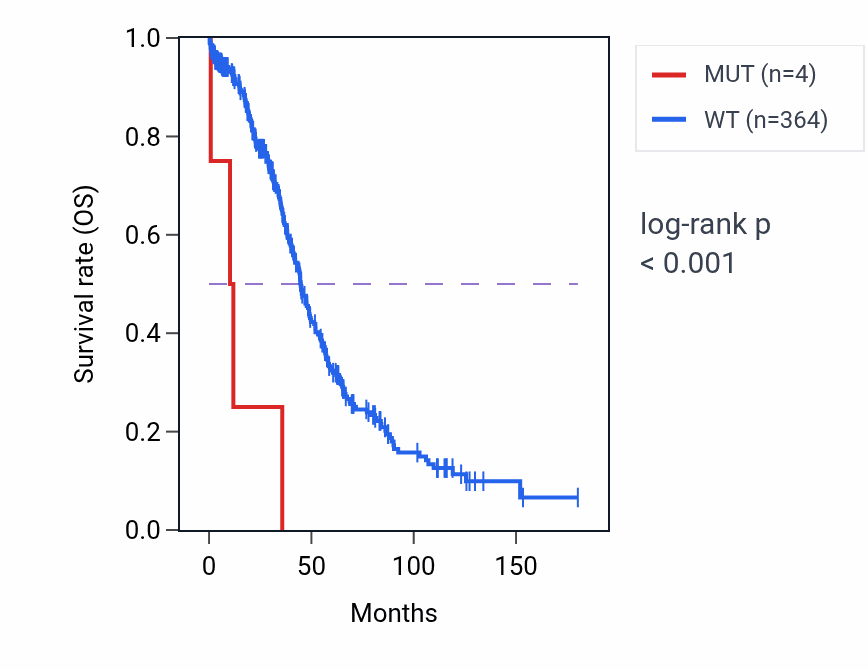
Mutation & survivalAcross TCGA pan-cancer cohorts, GRIA4 Mutation is linked to patient survival in 7 of 34 cancer types, making it a survival-associated GRIA4 data layer compared with 24 for mass-spec protein and 1 for mass-spec protein.
The strongest signal is observed in ovarian serous cystadenocarcinoma (OV), where higher GRIA4 Mutation is associated with worse overall survival. In most high-consensus cancer types, elevated GRIA4 expression acts as an unfavorable survival marker, although some lineages such as UCEC and STAD show a favorable association.
OV, LIHC, and UCEC are the cancer types where GRIA4 Mutation most reproducibly stratifies survival.
Mutation survival associations by lineage
Ranked by sampling consensus. AUC1 and AUC2 indicate survival in the high- and low-expression groups, respectively; the lower AUC marks the poorer-surviving group. p-values are from the log-rank test.
Pink = unfavorable, green = favorable. Showing the 7 strongest of 7 lineages.
Exploration
- Same gene, other analysis: GRIA4 tumor-vs-normal RNA expression · all GRIA4 data types