Cellular response to exogenous dsRNA
pathway activity — tumor vs normalAcross TCGA pan-cancer cohorts, RNA activity of the Cellular response to exogenous dsRNA pathway differs between tumor and matched normal tissue in 9 of the 18 cancer types tested.
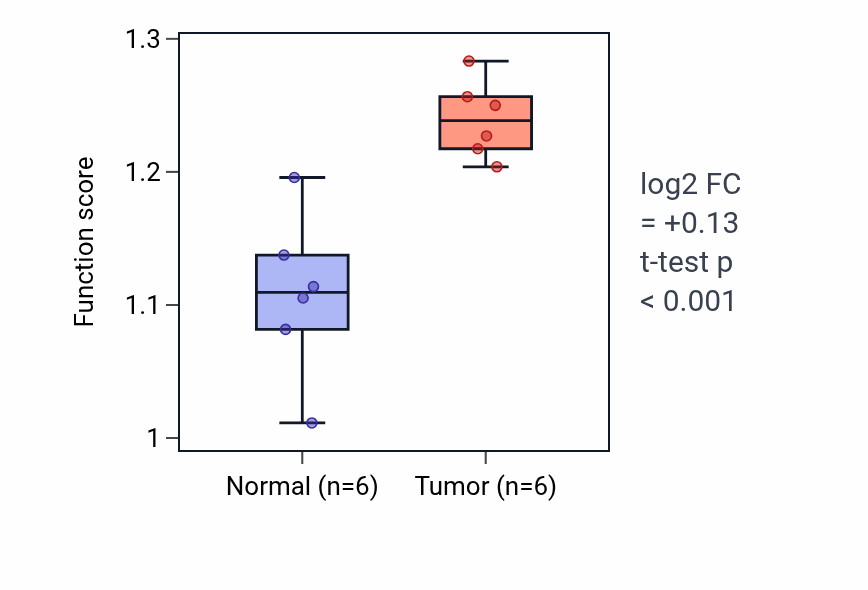
The strongest signal is observed in head and neck squamous cell carcinoma (HNSC), where pathway activity is higher in tumor tissue than in matched normal tissue. In most cancer types, this pathway shows higher activity in tumors, although a few cancer types, such as LUAD and LUSC, show the opposite pattern, with lower activity in tumor tissue.
HNSC, KIRC, and LUAD show the most reproducible tumor–normal differences in pathway activity.
Tumor vs normal pathway activity by lineage
Ranked by sampling consensus. Activity change represents the tumor-versus-normal difference in pathway activity on a log2 scale. Positive values indicate higher pathway activity in tumor tissue. The reported p-values are derived from the corresponding differential activity tests.
Pink = more active in tumor, green = less active in tumor. Showing the 9 strongest of 9 lineages.
Exploration
- Same pathway, other analysis: Cellular response to exogenous dsRNA activity & survival · full GO:0071360 profile