"Negative regulation of DNA damage response, signal transduction by p53 class mediator"
pathway activity — cross-omicsAcross TCGA patient cohorts, RNA activity of the "Negative regulation of DNA damage response, signal transduction by p53 class mediator" pathway is significantly associated with the protein abundance of multiple proteins, with the OV cohort showing a particularly strong set of associations.
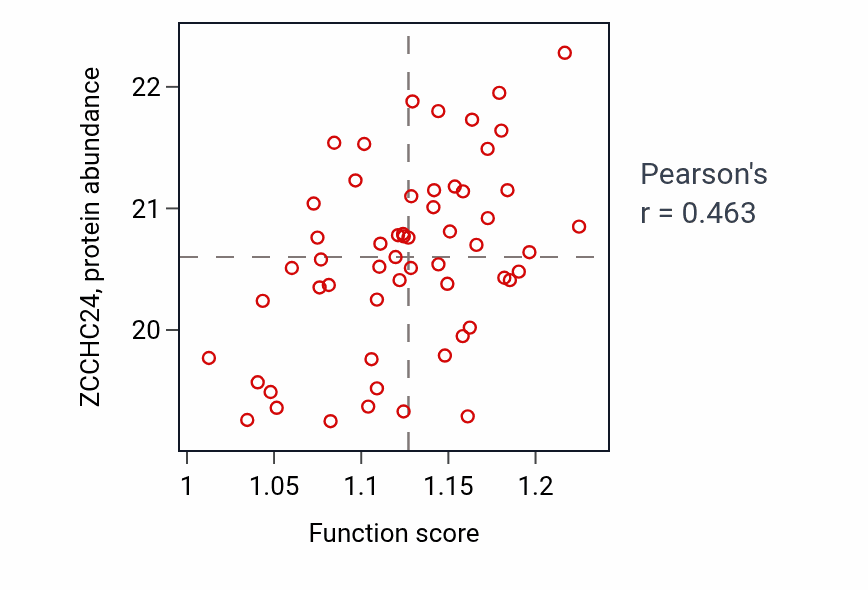
The most reproducible pathway-associated proteins across cancer lineages are ZCCHC24, CSE1L, and TMOD2, each associated with the pathway in up to 7 cancer types. Since the analysis shows associations rather than directional relationships, both pathway-to-partner and partner-to-pathway views are reported.
Each partner is linked to its corresponding Q-omics profile. The scatter plot shows the strongest association, "Negative regulation of DNA damage response, signal transduction by p53 class mediator" activity versus ZCCHC24 in OV (Pearson r = 0.46).