"Nuclear-transcribed mRNA catabolic process, deadenylation-independent decay"
pathway activity — cross-omicsAcross TCGA patient cohorts, RNA activity of the "Nuclear-transcribed mRNA catabolic process, deadenylation-independent decay" pathway is significantly associated with the RNA expression of multiple genes, with the OV cohort showing a particularly strong set of associations.
The most reproducible pathway-associated genes across cancer lineages are RPS28P4, NIP7, and EIF4BP1, each associated with the pathway in up to 3 cancer types. Since the analysis shows associations rather than directional relationships, both pathway-to-partner and partner-to-pathway views are reported.
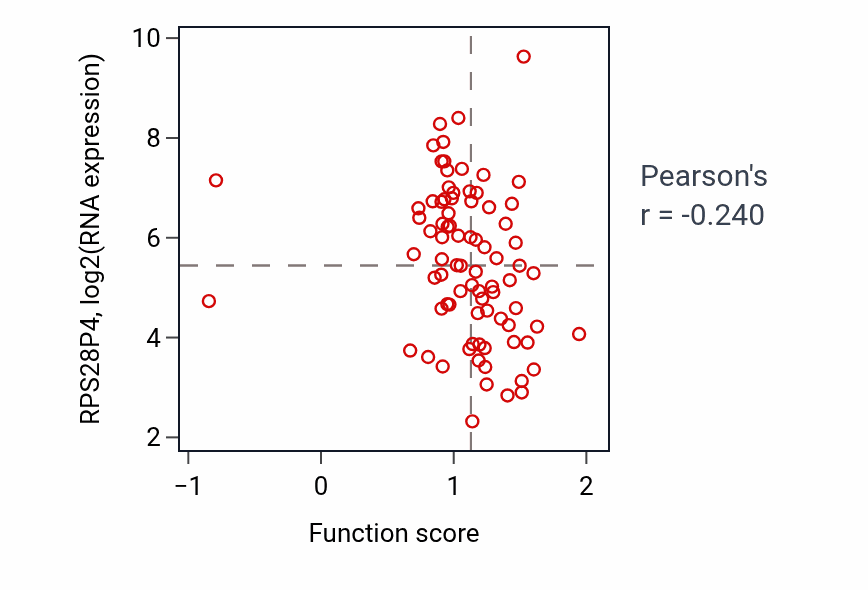
Each partner is linked to its corresponding Q-omics profile. The scatter plot shows the strongest association, "Nuclear-transcribed mRNA catabolic process, deadenylation-independent decay" activity versus RPS28P4 in OV (Pearson r = -0.24).