Striated muscle cell proliferation
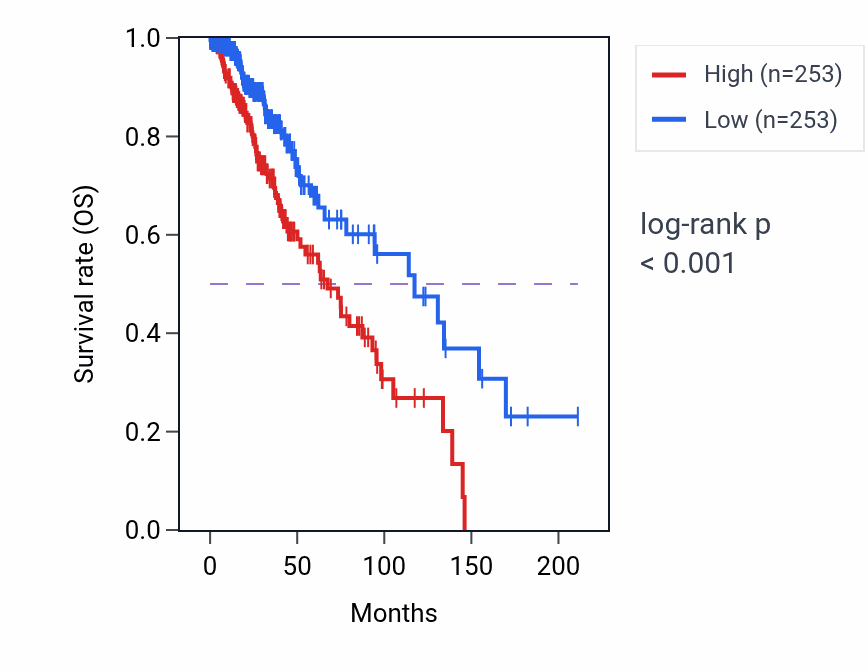
pathway activity & survivalAcross TCGA pan-cancer cohorts, RNA activity of the Striated muscle cell proliferation pathway is associated with patient survival in 25 of 34 cancer lineages. Pathway activity is summarized from the expression of its 82 member genes.
The strongest signal is observed in brain lower grade glioma (LGG), where higher Striated muscle cell proliferation pathway activity is associated with poorer overall survival. In most high-consensus cancer types, elevated pathway activity shows an unfavorable survival association, although some cancer types, such as ESCA and UCS, show the opposite pattern, with higher activity associated with better survival.
LGG, KIRP, and LIHC are the cancer lineages in which this pathway most reproducibly stratifies patient survival.
Pathway-activity survival associations by lineage
Exploration
- Same pathway, other analysis: tumor-vs-normal Striated muscle cell proliferation activity · full GO:0014855 profile