DPT
mutation — cross-omicsAcross TCGA patient cohorts, DPT mutation is significantly associated with the total protein of many other genes, with 8 significant associations in total. UCEC shows the largest number of these associations.
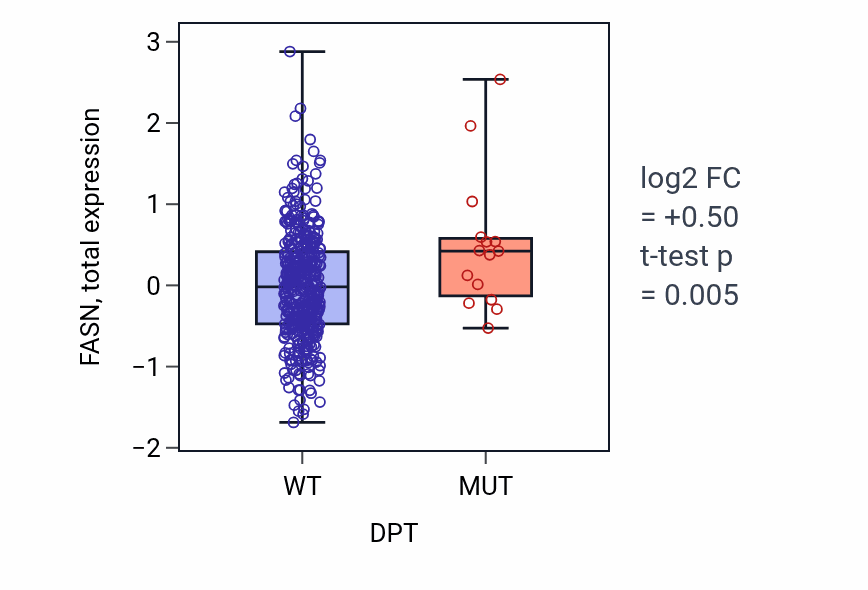
The most reproducible DPT-associated genes across cancer lineages are FASN, FoxM1, and Rad50. Each is linked with DPT in more than 1 cancer types. Because this analysis shows association rather than direction, both DPT-to-partner and partner-to-DPT results are reported.
Each partner links to its own Q-omics profile. The box plot shows the strongest example, FASN grouped by DPT-low versus DPT-high in UCEC.
mutation associated genes by consensus
Ranked by combined sampling and lineage consensus. X-score (DPT→partner) and Y-score (partner→DPT) are standardized regression coefficients; both directions are reported because the association is undirected. p-values are from the association test.
Each partner links to its Q-omics profile. Showing the 6 strongest of 8 associations by consensus.