CEBPA
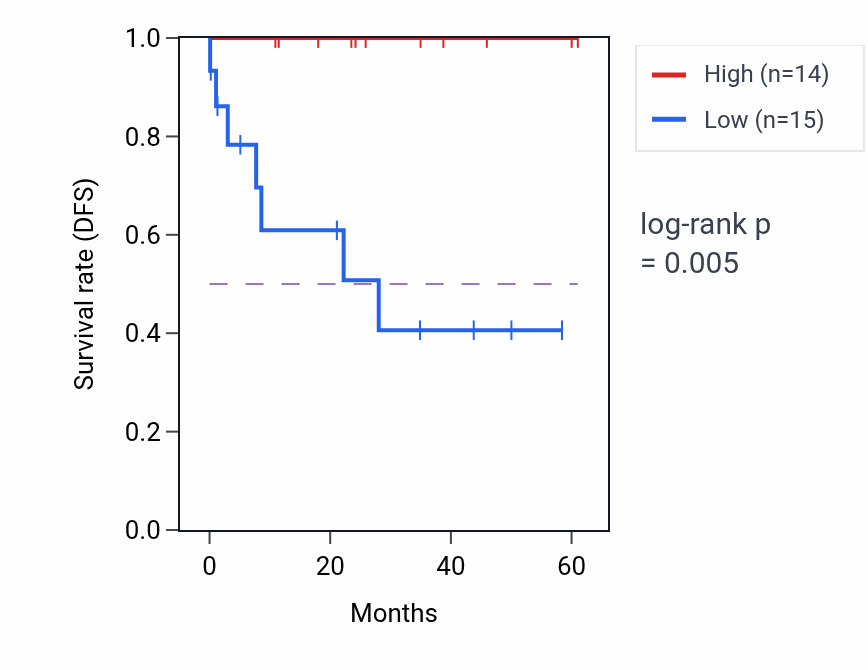
mass-spec protein & survivalAcross TCGA pan-cancer cohorts, CEBPA mass-spec protein is linked to patient survival in 5 of 34 cancer types, making it a survival-associated CEBPA data layer compared with 25 for mass-spec protein and 1 for mutation status.
The strongest signal is observed in lung squamous cell carcinoma (LSCC), where higher CEBPA mass-spec protein is associated with better disease-free survival. In most high-consensus cancer types, elevated CEBPA expression acts as an unfavorable survival marker, although some lineages such as LSCC and HNSC show a favorable association.
LSCC, HNSC, and LUAD are the cancer types where CEBPA mass-spec protein most reproducibly stratifies survival.
mass-spec protein survival associations by lineage
Ranked by sampling consensus. AUC1 and AUC2 indicate survival in the high- and low-expression groups, respectively; the lower AUC marks the poorer-surviving group. p-values are from the log-rank test.
Pink = unfavorable, green = favorable. Showing the 5 strongest of 5 lineages.
Exploration
- Same gene, other analysis: CEBPA tumor-vs-normal RNA expression · all CEBPA data types