GSK626616AC
response biomarkers — cross-omicsAcross CCLE and GDSC cell-line panels, response to GSK626616AC is significantly associated with the protein-level pathway activity of multiple pathways, with LARGE_INTESTINE cell lines showing a particularly strong set of associations.
The most reproducible GSK626616AC response-associated pathways across cancer lineages are Megakaryocyte development, Calcium ion homeostasis, and Phagocytosis, each associated with drug response in up to 10 lineages. Since the analysis identifies associations rather than directional relationships, both response-to-biomarker and biomarker-to-response views are provided.
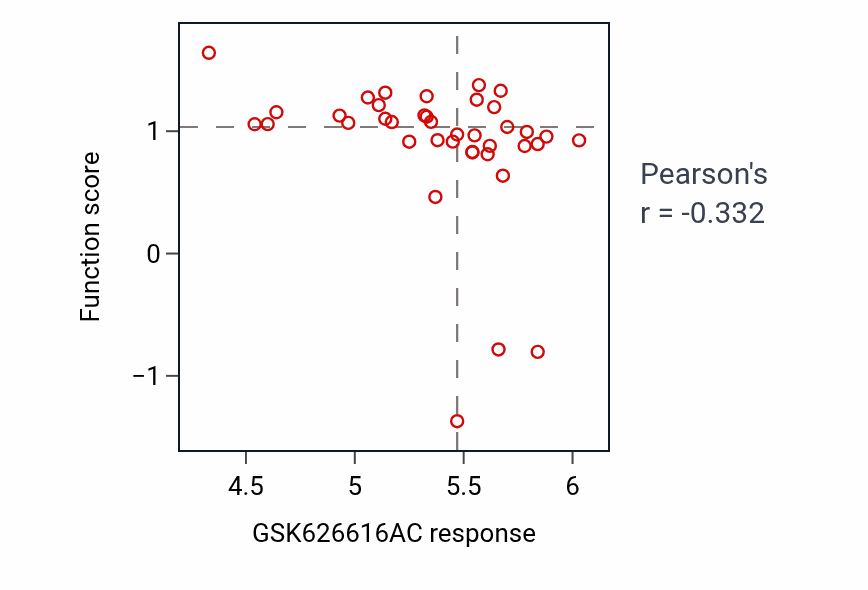
Each biomarker is linked to its corresponding Q-omics profile. The scatter plot shows the strongest observed association, GSK626616AC response versus Megakaryocyte development protein-level pathway activity in LARGE_INTESTINE (Pearson r = -0.33).
Protein-level pathway activity biomarkers of GSK626616AC response
GSK626616AC response vs Megakaryocyte development — LARGE_INTESTINE
Exploration
- full GSK626616AC cross-omics profile · other biomarker types are linked from the drug overview.